
Become a Certified NLP Practitioner
Master your emotional state, sharpen your communication & Influence and turn what you
know into measurable results in life and business...
Next training is limited. Apply now to be considered!
Los Angeles' Premier NLP Training Center
Why This Training Produces Results!
“I’ve seen what works... and what doesn’t. This training is designed to help you apply what you learn and produce real results.” — John James Santangelo, PhD
Our Most Popular NLP Programs
Become a true master of NLP to influence yourself as well as others!
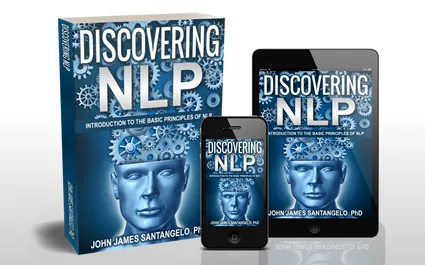
Discovering NLP book
Best-Selling NLP Book on Amazon!
Free Mini-Course App
Download App Apple & Google Store

"LIVE" NLP Training
Join a Group of Committed Individuals!
Tony Robbins Got NLP Certified...
Why Choose Our NLP Certification
TIME… pure and simple. No one will give you the support you need during and after your training, NO ONE!
Spend 12 days with us or spend another 12 years with some other program… because you expect RESULTS!
Unbelievable Opportunity
Attend for FREE again and again once you graduate... Forever!
Unbelievable Support
Unlimited email support from John (NO company dare give you this!)
Unbelievable Offer
2-for-1 price you'll never find!
50% Off our regular price $2,995.

PRODUCTS

TRAININGS

SUPPORT
Come Break-Through Your Past Limitations
Break Through What’s Been Holding You Back
During the training, you won’t just talk about change—you’ll experience it. You’ll identify the fears, patterns, and limitations that have been holding you back… and confront them directly.
As part of the process, you’ll create a physical representation of what’s been stopping you—and what you’re committed to achieving. And at the end of the training, you’ll break through it.
Not as a symbolic gesture - but as a decision you act on.

Fulfill Your Potential
Seriously... where can you find an safe environment that nurtures and can help you uncover your hidden potential...
No where I know... unless with all of us!

Find Your Balance
Most people are so far out of balance in their lives they no longer know where they could be... this training allows you to SAFELY EXPLORE where you could be!

Create Your Results
How often in todays society are you encouraged to make mistakes and get amazing feedback to learn and then more importantly, get results you truly desire?
Trusted By 1000+ Students...
We pride ourselves on our amazing content, but more important... our Graduates!
John's support is truly AMAZING!
"Not only have I grown my business by 20% every month but have met the woman of my dreams. Had it not been for your NLP course I don't know if everything would been happening it is today. If you are truly interested in gaining your personal power, you must use John and - LANLP com
Max Gorin -
LifeLine Ambulance Service
MAXIM GORIN
"Your unique and unparalleled efforts to customize Neuro Linguistic Programming training for military applications has significantly contributed to the overall high state of readiness of US Army Special Operations Command's Counterintelligence Team. Your specialized training is a great credit upon your company."
Chief Alan Gruel -
US Army Special Operations

CHIEF ALAN GRUELL
This course is the one you need!
"I've learned so much from him about how to visualize what I truly want, but how to make it happen! John's NLP training programs are an amazing path to realize your dreams. Now its your turn to make yours a reality as well! You must take the next step and get this NLP mini-course. You're gonna love it!
Mandy Keene -
Tony Robbins Coach

MANDY KEENE
John's Most Popular Books
Reading great books is what successfully influences your mind!
Discovering NLP
Best-Selling NLP Book on Amazon!

Control Your Emotions
Control your emotions, master your life!

Setting Goals
Finally, easily get your goals!

About John...
John James Santangelo PhD... a nationally acclaimed speaker, NLP trainer, author and results coach has been a guiding force in empowering individuals and businesses to excel at their peak performance. He is a foremost authority in success principles & expert in the field of communication, a behavioral specialist, NLP trainer, and a Ph.D. as a clinical hypnotherapist. John has the knowledge, experience and expertise working with companies such as Learning Annex, CSUN University, Mary Kay, RE/MAX Realtors, Well Point, Multiple-Sclerosis Society, Make-A-Wish Foundation, Xerox, the L.A. Sheriff's Dept., the Teamsters Union, AND months after 9/11, with the US Army counter-intelligence team.


